


As human society is now stepping onto a new historical stage, on which digitalization becomes the major power of productivity, TVET shall undergo proactive transformation to serve the digital economy and the future world of work. The UNESCO Chair on Digitalization in TVET aims to close digital divides, ensure equitable education, promote lifelong learning, and promote sustainable global socio-economic development.
Objectives
The long-term objective of this UNESCO Chair
The Chair will initiate close cooperation between the education and private sectors, develop TVET programmes in digital technologies and teaching & learning resource databases, and facilitate digital transformation of traditional TVET programmes, aiming to promote digitalization in TVET and close the digital divide in developing countries, drive both digital transformation of traditional industries and industrialization of digital technologies, and finally foster global digital economic growth and sustainable development.
Specific objective
(1) Governance and Teaching & Learning Capacity Building for Digitalization in TVET in developing countries;
(2) Framework and Ecosystem Development for Digitalization in TVET;
(3) Programmme and Curriculum Development for Digitalization in TVET;
(4) Teaching & Learning Innovation for Digitalization in TVET.
The UNITWIN/UNESCO Chairs Programme mobilizes expertise of higher education and research institutions to address the interdependent challenges of today’s increasingly complex world. It was established in 1992 with the vision to advance an integrated system of research, training and activities in diverse fields by building university networks and encouraging inter-university cooperation through the transfer of knowledge and expertise across borders.
The UNITWIN Programme is a unique intellectual and strategic resource of some 900 institutions from over 120 countries aimed at strengthening connections between research and development policy and practice at country, regional and global levels. It has contributed to strengthening higher education systems and fostering collaborative research partnerships and networks. Through its integrated approach that combines research, teaching and training, as well as community engagement, the Programme has proven value in advancing UNESCO’s interdisciplinary knowledge generation and the Organization’s role as global observatory and as a laboratory of ideas. It has established new teaching programmes, generated novel ideas through research and dialogue, and contributed to the enrichment of existing higher education partnerships and networks. Mostly, it has inspired generations of students and researchers to align their work with UNESCO in support of the ideals of the Organization.
A UNESCO Chair is a team led by a higher education or research institution that partners with UNESCO on a project to advance knowledge and practice in an area of common priority. The partnership is formalized through an agreement between the Director-General of UNESCO and the head of the institution hosting the UNESCO Chair (Rector, President, Vice-Chancellor). Established within a teaching or research unit/department/faculty of the higher education or research institution, the UNESCO Chair is led by an academic head referred to as the Chairholder. The Chairholder is supported by a team of faculty members, lecturers, researchers and students from the host institution(s) and personnel from other partner organizations (e.g. other institutions, NGOs, public private sector, authoroties) in the host country and in other countries who are associated with the activities of the Chair.
For more information, please see: https://www.unesco.org/en/unitwin
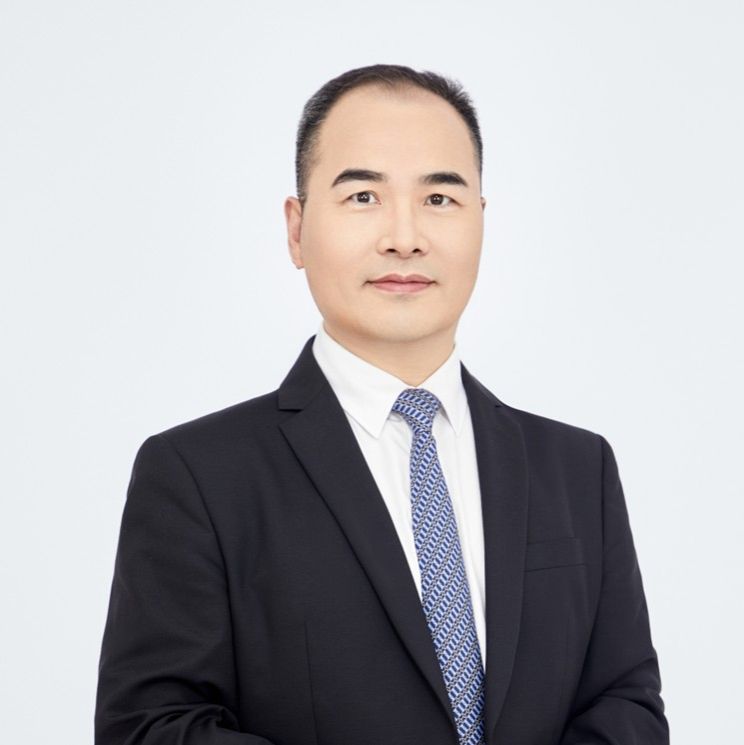
Professor Dr. XU Jianling
Chairholder, President, Shenzhen Polytechnic University
Professor XU Jianling is a seasoned education leader and scholar dedicated to shaping the future of TVET through policy design, institutional innovation, and academic advancement. With a Ph.D. in Higher Education and extensive experience in both government and academia, Professor Xu plays a pivotal role in driving China’s TVET reforms and enhancing global collaboration. As President of Shenzhen Polytechnic University and holder of the UNESCO Chair on Digitalization in TVET, he integrates policy insight, research leadership, and international engagement to lead transformative change in the sector.
Academic & Governance Highlights
Policy Design & Institutional Innovation Leader
Former Deputy Director-General of the Shenzhen Municipal Education Bureau, Professor Xu led the founding and transformation of 10 higher education institutions in Shenzhen and spearheaded regional higher education reform.
Principal Investigator of National and Regional Projects
Professor Xu has led more than 10 major research projects supported by the Chinese Academy of Engineering, Ministry of Education, Guangdong Province, and Shenzhen Municipality, contributing to policy development and academic system-building.
Prolific Contributor to TVET Research
With over 50 journal articles, Professor Xu focuses on digital transformation, dual-qualified teacher development, and industry–education integration. He has authored 5 scholarly monographs and edited 4 textbook series.
Advocate for TVET Academic Discourse & Dissemination
Professor Xu serves as Editor-in-Chief of Vocation · Technology · Education (China’s first English-language TVET journal) and the Journal of Shenzhen Polytechnic University, as well as academic adviser to Social Sciences in Shenzhen, among other editorial and advisory positions, actively promoting global dialogue on TVET research and dissemination.
Member of National Think Tanks & Academic Organizations
Professor Xu holds prominent roles in national academic and policy advisory bodies, including the Education Committee of the Chinese Academy of Engineering, the Expert Advisory Committee (Sub-committee on Discipline Development of TVET) under the Chinese Society for Technical and Vocational Education (CSTVE), and the Academic Development and Consultation Committee of Guangdong Association of Higher Education (GAHE). He also serves as a doctoral supervisor at Tsinghua University, Xiamen University, and Guangzhou University.
Global Speaker & International Collaborator
He has delivered keynote speeches on multiple occasions at major events such as the Belt and Road Academic Conference on TVET, World Digital Education Conference, and World Vocational and Technical Education Development Conference, actively engaging in global dialogue and knowledge sharing on the development of TVET.
The UNESCO Chair on Digitalization in TVET is committed to advancing south-south and multi-partner cooperation based on the principles of Extensive Consultation, Joint Contribution, and Shared Benefits. Our initiatives encompass six key sub-programmes designed to transform and innovate technical and vocational education and training (TVET) in the digital age. These include:
Theoretical Development: We aim to deepen the understanding of digitalization within TVET, establishing a solid theoretical foundation for further innovations.
Educational Programmes and Resources: Our efforts will focus on developing and enhancing education programmes, alongside teaching and learning (T&L) resources, in the field of digital technologies.
Digital Transformation of TVET programmes: We are dedicated to modernizing traditional TVET programmes through digital transformation, ensuring they meet current and future demands.
Generic Digital Skills and Curriculum Updates: By establishing qualifications for generic digital skills, we will update curriculum syllabuses to reflect the latest advancements and requirements in digital competency.
Smart Campus and Virtual Ecosystem: The creation of a smart campus and a virtual training ecosystem will facilitate innovative learning and teaching environments.
New Technologies and Pedagogies: The development of novel TVET T&L technologies and pedagogies, enabled by digitalization, will further our mission.
In addition to these sub-programmes, we are committed to enhancing teachers’ capacity for digitalization. This includes training and capacity-building for digital governance and teaching methodologies in TVET.
Our overarching goals are to bridge digital divides, ensure equitable and quality education, foster lifelong learning opportunities, and contribute to global socioeconomic sustainable development.
Defining “Digitalization in TVET”
As human society is now stepping into a new historical stage, on which digitalization becomes the major power of productivity, TVET shall undergo proactive transformation to serve the digital economy and the future world of work. This UNESCO Chair defines “Digitalization in TVET” in eight dimensions:
Research on theories and practices of Digitalization in TVET to incubate and advocate the concept of “Digitalization in TVET”;
Development of the Digitalized TVET Governance Framework to facilitate digital transformation of governance in TVET institutions;
Development of the TVET Teacher Digital Competency Framework to improve capacity building and performance appraisal for teachers;
Creation of teaching & learning (T&L) resource databases for programmes in digital technologies to prepare students for the digitalized world of work;
Digital transformation of traditional TVET programmes to match sustainable development needs and future skills needs;
Development of professional and generic digital skills qualifications to facilitate digital upskilling among the workforce;
Digital transformation of T&L techniques and methods to improve the efficiency and effectiveness of TVET;
Support digitalization in developing countries to help close the digital divide for south-south cooperation, multi-partner cooperation and wider sustainable development benefit.
Sub-programmes
As shown below, the Chair will conduct six sub-programmes (a-f), which are in alignment with the corresponding UN, UNESCO and UNEVOC strategies.
No. |
Sub-programmes |
Details |
a |
Research on Theories and Practices of Digitalization in TVET |
To analyse the roadmaps for both industrialization of digital technologies and the digital transformation of traditional industries and forecast digital skills needs of the future world of work, to develop the concepts, approaches and methodologies of Digitalization in TVET, to produce the TVET-Digitalization coupling theory and practices, to eventually lead the future TVET innovation. |
b |
Development of TVET Programmes in Digital Technologies |
To develop emerging TVET programmes in digital technologies in response to the skills needs arising from the industrialization of digital technologies, to conduct studies in the field of digital technologies covering artificial intelligence, intelligent manufacturing, electronic information technology, communication technology, smart car technology, financial technology, and digital cultural creation technology and identify skills needs in the emerging digital sector, to develop syllabuses for education programmes in digital technologies and corresponding T&L resource databases, to eventually offer education and training programmes with coupling model of curricula and qualification. |
c |
Digital Transformation of Traditional TVET Programmes |
To promote the digital transformation of traditional TVET programmes in response to the skills needs arising from the digital transformation of traditional industries, to embed advanced technologies into education programmes and curricula, to iteratively update curriculum syllabuses, T&L processes, and contents, to eventually prepare students with digital and technical skills for industrial digitalization and the broader digital economy. |
d |
Development of Generic Digital Skills Qualification and T&L Solutions |
To develop generic digital skills qualification, to update curriculum syllabuses with the inclusion of skills assessment indicators in the qualification, to organize regional/international generic digital skills competitions, to eventually foster T&L and enhance TVET students’ generic digital skills. |
e |
Transformation of TVET T&L Technologies and Pedagogies Enabled by Digitalization |
To construct a smart campus with smart classrooms and a virtual training ecosystem by leveraging digital technologies such as AI, 5G, VR and AR, to promote AI-empowered innovation in T&L technologies and pedagogies, to build teacher competency for digitalized T&L, to eventually enhance efficiency & effectiveness of TVET. To share online education resources with developing countries through digital platforms, to eventually close digital divides, ensure inclusive and equitable quality TVET, contribute to lifelong learning and sustainable development. |
f |
Capacity Building for Digitalization in TVET |
To offer an annual TVET Digitalization Leadership Programme for International TVET policy makers, institution leaders and program directors, with training fees and international transportation fees financed. To annually offer 1-2 teacher training workshops on Digitalization in TVET, with training fees financed. The leadership programme and teacher training would cover the theoretical framework of Digitalization in TVET, digital transformation of TVET governance, solutions to Digitalization in TVET, development of digital skills qualification, distance learning assessment, etc. |
As human society is now stepping onto a new historical stage, on which digitalization becomes the major power of productivity, TVET shall undergo proactive transformation to serve the digital economy and the future world of work. The UNESCO Chair on Digitalization in TVET aims to close digital divides, ensure equitable education, promote lifelong learning, and promote sustainable global socio-economic development.
Objectives
The long-term objective of this UNESCO Chair
The Chair will initiate close cooperation between the education and private sectors, develop TVET programmes in digital technologies and teaching & learning resource databases, and facilitate digital transformation of traditional TVET programmes, aiming to promote digitalization in TVET and close the digital divide in developing countries, drive both digital transformation of traditional industries and industrialization of digital technologies, and finally foster global digital economic growth and sustainable development.
Specific objective
(1) Governance and Teaching & Learning Capacity Building for Digitalization in TVET in developing countries;
(2) Framework and Ecosystem Development for Digitalization in TVET;
(3) Programmme and Curriculum Development for Digitalization in TVET;
(4) Teaching & Learning Innovation for Digitalization in TVET.

